
In a troubling new development, cybercriminals are increasingly targeting the core infrastructure behind artificial intelligence, including GPU clusters, model-serving gateways, and training pipelines used in large language model (LLM) deployments.
Over the past six months, a new malware family dubbed “ShadowInit” has been observed in attacks focused not just on GPU resources but on stealing proprietary model weights and silently altering inference outputs, potentially sabotaging everything from fraud detection to autonomous vehicles.
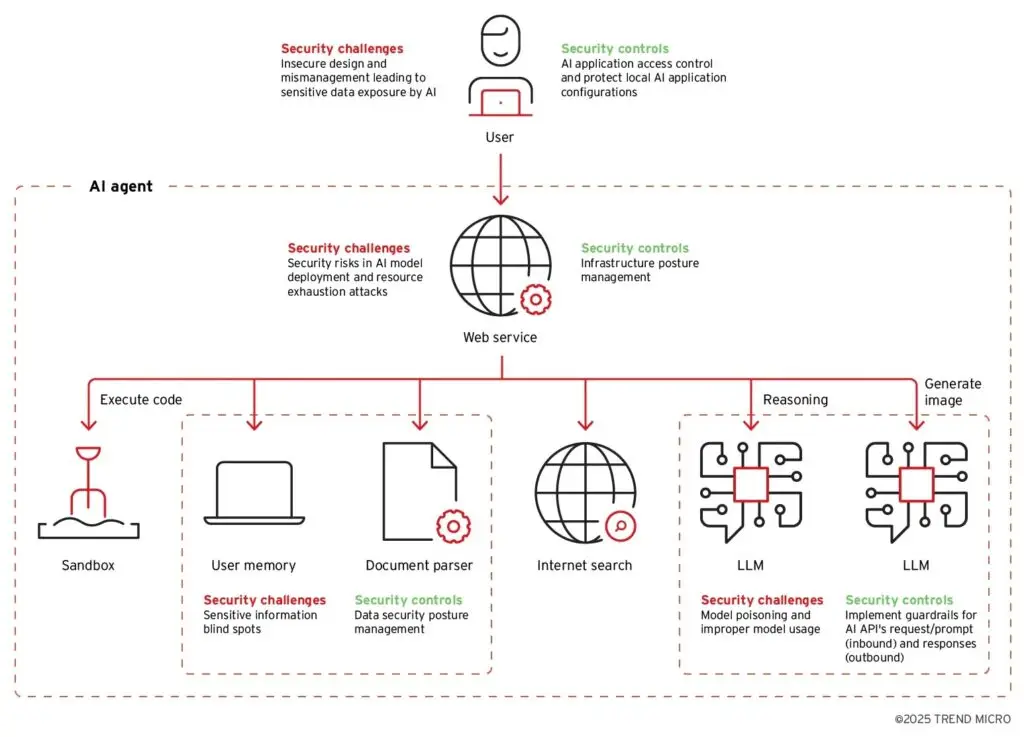
ShadowInit’s Entry Point and Impact
Initial telemetry shows that ShadowInit gains access through model training notebooks that rely on unpinned dependencies. When such a notebook is executed, it downloads a poisoned package containing an ELF dropper targeting NVIDIA’s CUDA runtime.
One case involved a research lab on the U.S. East Coast running A100 clusters. Analysts at Trend Micro noticed unusual outbound traffic, later tracing it to binaries linked with the BianLian ransomware group. These actors are reportedly selling leaked model weights on darknet markets for as little as $5,000 per 100 MB.
ShadowInit’s damage is both immediate and long-term:
- Immediate costs include ~6,400 GPU-hours wasted per breach and system downtime during integrity checks.
- Long-term damage involves adversaries using stolen model weights to generate advanced phishing content or fine-tune rival AI models at minimal cost.
In one documented incident, a tampered vision model led to wrong defect detection in a manufacturing line, halting production for 47 minutes and causing a $1.3 million loss.
ShadowInit uses clever obfuscation. Its payload is base64-encoded inside Jupyter notebook metadata, avoiding detection by typical user-space scanners. Once loaded into GPU memory, it disables NVIDIA’s Compute Sanitizer, and even forges kube-audit logs to simulate normal autoscaling events, pushing real alerts out of view on dashboards.
Container-Based Infection and GPU-Level Evasion
ShadowInit’s primary attack vector is malicious side-loading via OCI containers. For instance, a developer may run a legitimate-looking command like:
docker pull cuda:12.5-base
However, attackers intercept this request using a manipulated registry that rewrites image manifests, swapping in a malicious layer.
A Go snippet used by the attackers demonstrates how the substitution happens:
func rewriteManifest(w http.ResponseWriter, r *http.Request, legit, evil string) {
    body, _ := io.ReadAll(r.Body)
    manifest := bytes.ReplaceAll(body, []byte(legit), []byte(evil))
    w.Header().Set("Content-Type", "application/vnd.oci.image.manifest.v1+json")
    w.Write(manifest)
}
Once the container is launched, the rogue layer:
- Mounts
/dev/nvidia0with raw I/O access - Deploys a tiny eBPF program to monitor GPU DMA writes
- Extracts inference traffic without modifying kernel code
- Pipes the stolen data via an AES-GCM tunnel to a Cloudflare Workers endpoint, mimicking telemetry from AI model hubs
This high stealth operation avoids traditional monitoring tools, which often ignore dynamic container layers and GPU-level activity.
Mitigation Strategies for Defenders
Detection remains difficult, but several mitigation strategies can reduce risk:
- Pin dependencies in all AI training notebooks
- Enforce image-signature verification before deploying any container
- Forward GPU firmware logs to SIEM for real-time analysis
- Monitor for suspicious outbound traffic, especially targeting unusual domains
Researchers recommend deploying runtime attestation agents that hash live model weights and compare them with known baselines every 15 minutes. This method could have detected ShadowInit within the first hour of its execution.

