
Cybercriminals are increasingly taking advantage of generative AI platforms to create advanced phishing campaigns that are much harder for traditional security systems to detect.
The rapid growth of GenAI services has built an environment where attackers can easily generate realistic phishing emails, mimic trusted organizations, and scale attacks with very little technical skill required.
Modern AI-powered tools, such as automated website builders, natural language generators, and chatbot services, have completely reshaped the cyber threat landscape.
Rising Adoption of GenAI Across Industries
Recent security data shows that GenAI adoption has surged rapidly, with overall usage more than doubling in just six months.
Research from Palo Alto Networks highlights that the high-tech industry leads AI adoption, representing over 70% of total usage.
While beneficial for productivity, this trend also creates new attack opportunities, since malicious actors now exploit the same platforms trusted businesses rely on.
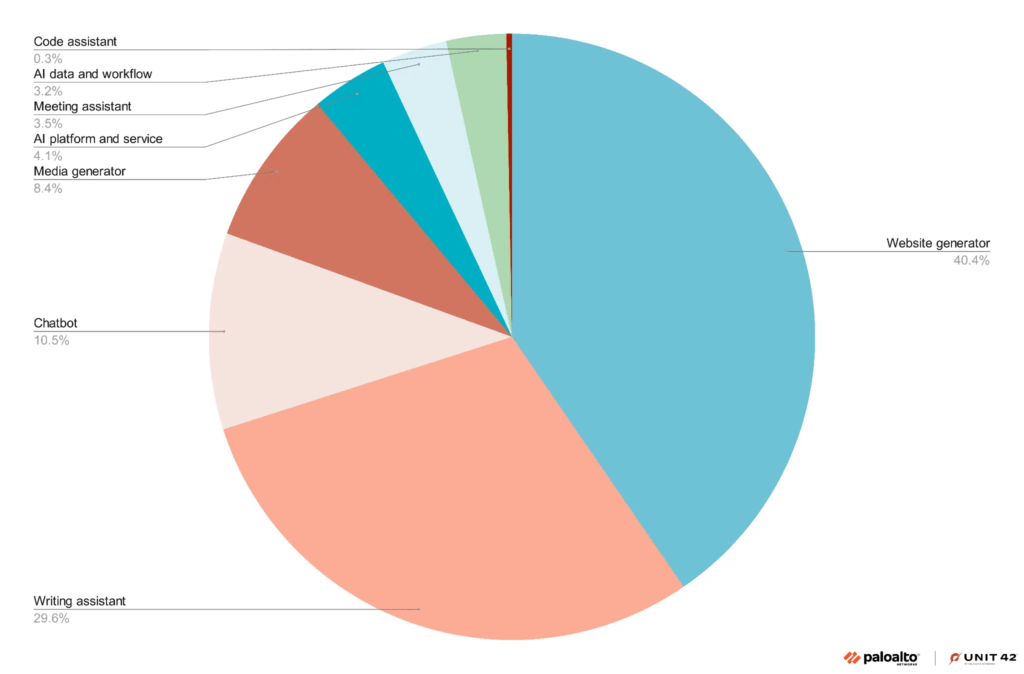
Phishing analysis reveals that AI website generators are the most commonly abused category, accounting for nearly 40% of GenAI-based malicious activity. Writing assistants follow at 30%, while chatbots are involved in about 11% of attacks. These numbers show how diverse AI misuse has become.
AI-Powered Website Builders: The Leading Attack Vector
The most dangerous misuse of GenAI involves AI-powered website builders, which can produce complete and professional-looking websites within seconds.
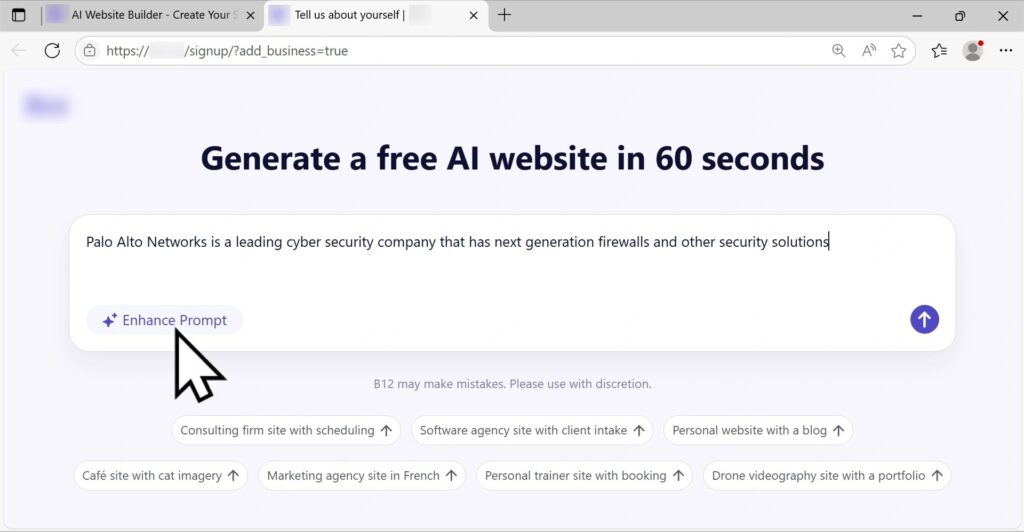
Researchers observed real phishing sites generated with these tools, where attackers simply provided a short description of a company, and the AI created entire websites with images, branding, and service pages that looked genuine.
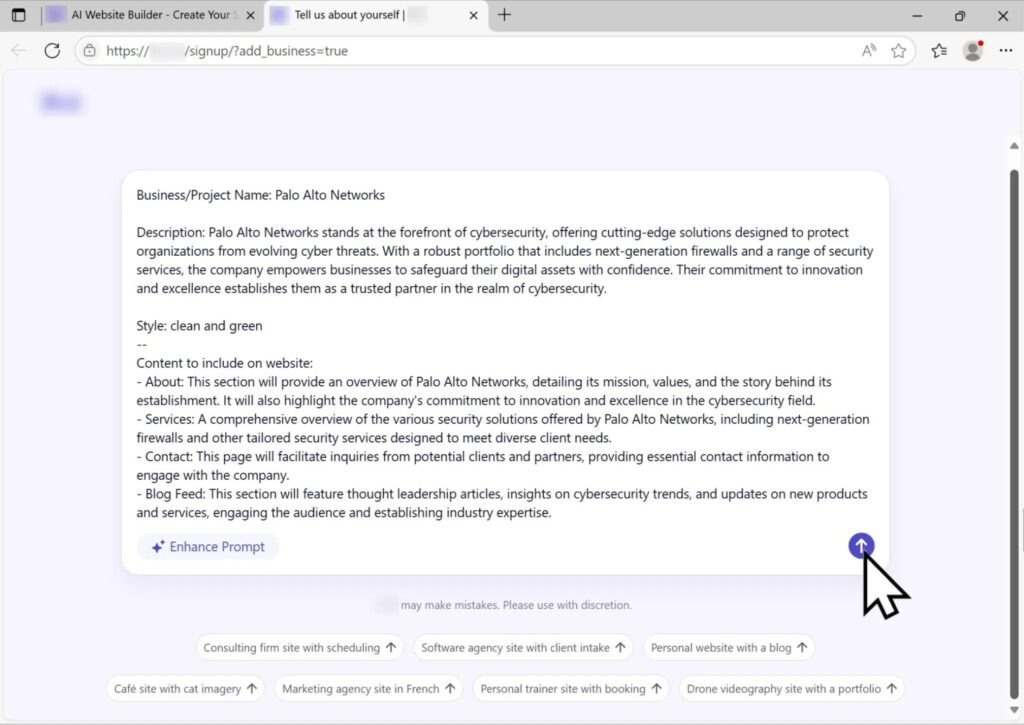
These platforms usually demand very little verification, often requiring nothing more than a valid email address, with no phone or identity checks.
In one test, a short prompt about a cybersecurity company resulted in a full website offering fake threat intelligence services and firewall solutions that could easily fool unsuspecting users.

Two-Stage Attack Methodology
Most phishing websites built with GenAI follow a two-step process:
- The first page lures victims with messages like “You have new documents” and clear call-to-action buttons.
- Clicking these elements redirects victims to credential-harvesting pages designed to steal usernames and passwords, often for Microsoft accounts and other widely used services.
Although current attacks remain relatively basic, experts warn that as AI platforms advance, these phishing techniques will become far more sophisticated.
The combination of automated content creation, weak verification processes, and rapidly improving AI capabilities signals a worrying trend for the future of phishing attacks.

