Network Security

Fortinet Fixes Critical SQL Injection Flaw Allowing Unauthenticated Code Execution

Fortinet has released security updates to remediate a critical security flaw affecting FortiClientEMS that could allow attackers to execute arbitrary code without authentication. The vulnerability is tracked as CVE-2026-21643 and carries a CVSS score of 9.1, placing it among high impact enterprise security risks. According to Fortinet, the issue stems from improper handling of user […]

Fortinet Fixes Critical SQL Injection Flaw Allowing Unauthenticated Code Execution Read More »

China-Linked UNC3886 Targets Singapore Telecom Sector in Cyber Espionage Operations

Singapore’s Cyber Security Agency (CSA) has confirmed that a China linked cyber espionage group known as UNC3886 carried out a coordinated and targeted campaign against the country’s telecommunications sector. According to CSA, the operation was deliberate, highly organized, and carefully executed. All four major telecommunications providers in Singapore, M1, SIMBA Telecom, Singtel, and StarHub, were

China-Linked UNC3886 Targets Singapore Telecom Sector in Cyber Espionage Operations Read More »

TeamPCP Worm Abuses Cloud Infrastructure to Build Criminal Operations

Cybersecurity experts have uncovered a large and coordinated malicious campaign that abuses cloud native environments to construct infrastructure used for cybercrime operations. Researchers describe the activity as a worm driven operation that spreads automatically across exposed cloud services. The campaign was first observed around December 25, 2025, and relies on publicly exposed Docker APIs, Kubernetes

TeamPCP Worm Abuses Cloud Infrastructure to Build Criminal Operations Read More »

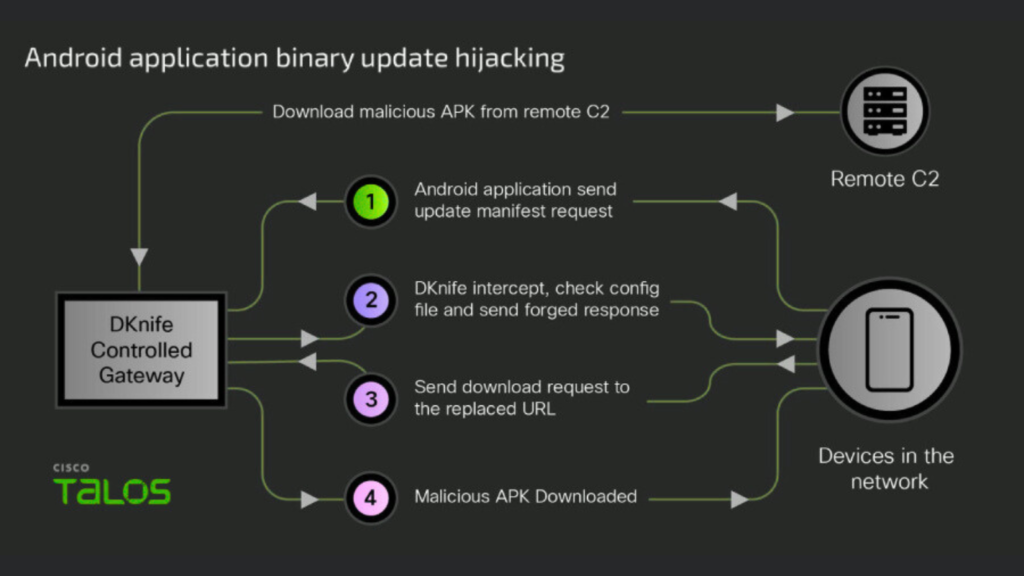
China-Linked DKnife AitM Framework Targets Routers to Hijack Traffic and Deliver Malware

Cybersecurity researchers have uncovered a sophisticated adversary-in-the-middle framework named DKnife, which has been operated by China-linked threat actors since at least 2019. The framework is designed to compromise routers and edge devices, enabling large-scale traffic interception, credential theft, and targeted malware distribution. According to a report published by Cisco Talos, DKnife consists of multiple Linux-based implants

China-Linked DKnife AitM Framework Targets Routers to Hijack Traffic and Deliver Malware Read More »

Asian State-Backed Group TGR-STA-1030 Breaches 70 Government and Infrastructure Organizations

Cybersecurity researchers at Palo Alto Networks Unit 42 have uncovered a previously unknown state-backed cyber espionage group that has compromised at least 70 government and critical infrastructure organizations across 37 countries within the last year. The threat actor, tracked as TGR-STA-1030, has also conducted widespread reconnaissance activities targeting government-related infrastructure in 155 countries between November and

Asian State-Backed Group TGR-STA-1030 Breaches 70 Government and Infrastructure Organizations Read More »

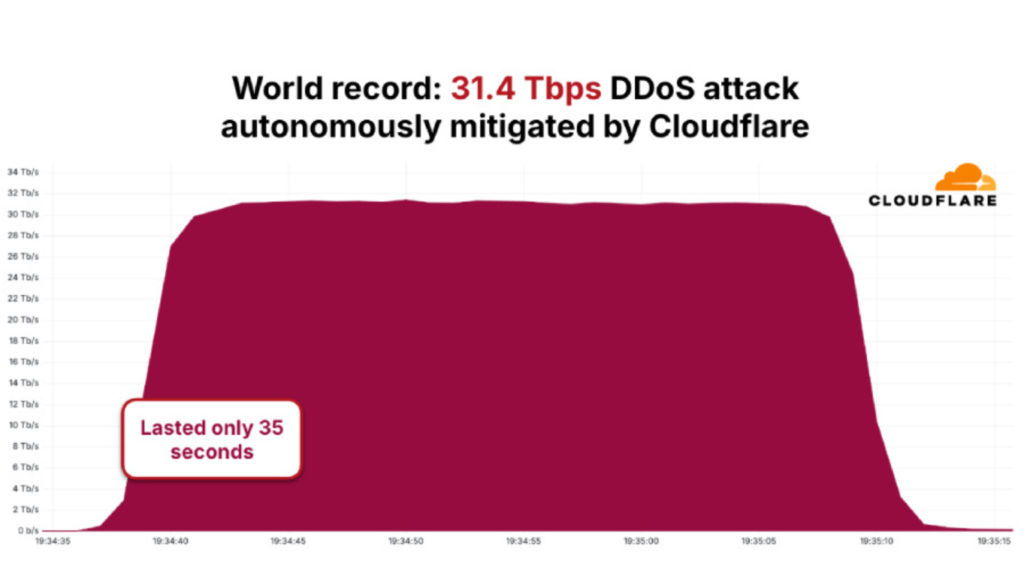
AISURU and Kimwolf Botnet Launch Record-Breaking 31.4 Tbps DDoS Attack

Cybersecurity researchers have attributed a record-breaking distributed denial-of-service attack to the AISURU and Kimwolf botnet, which generated traffic peaks of 31.4 terabits per second and lasted approximately 35 seconds, making it one of the largest DDoS attacks ever recorded. Cloudflare confirmed that the attack occurred in November 2025 and was automatically detected and mitigated by its systems. The company said the incident

AISURU and Kimwolf Botnet Launch Record-Breaking 31.4 Tbps DDoS Attack Read More »

Infy Hackers Restart Operations Using New C2 Servers After Iran’s Internet Blackout Ends

The Iranian state-linked threat group known as Infy, also tracked as Prince of Persia, has resumed cyber operations after a temporary pause that coincided with Iran’s nationwide internet shutdown in early January 2026. Researchers say the group reappeared with new command-and-control (C2) servers, reinforcing assessments that Infy operates with state backing. According to a report released by SafeBreach, the

Infy Hackers Restart Operations Using New C2 Servers After Iran’s Internet Blackout Ends Read More »

Malicious NGINX Configurations Power a Large-Scale Web Traffic Hijacking Campaign

Cybersecurity researchers have identified an active campaign in which attackers exploit NGINX installations and management platforms such as Baota (BT) Panel to hijack web traffic on a large scale. The operation manipulates web requests, routing them through infrastructure controlled by threat actors. Datadog Security Labs reported that the campaign leverages React2Shell (CVE-2025-55182, CVSS score: 10.0) exploits alongside malicious NGINX configurations to

Malicious NGINX Configurations Power a Large-Scale Web Traffic Hijacking Campaign Read More »

Google Disrupts IPIDEA, One of the World’s Largest Residential Proxy Networks

Google has announced the disruption of IPIDEA, widely recognized as one of the largest residential proxy networks in operation. The takedown involved legal actions to seize dozens of domains used to control infected devices and route proxy traffic, rendering IPIDEA’s main website (www.ipidea.io) inaccessible. IPIDEA previously promoted itself as a leading IP proxy provider, claiming

Google Disrupts IPIDEA, One of the World’s Largest Residential Proxy Networks Read More »

Fortinet Patches CVE-2026-24858 Following Active FortiOS SSO Exploitation

Fortinet has started rolling out security updates to fix a critical vulnerability in FortiOS, which has recently been actively exploited in the wild. The flaw, tracked as CVE-2026-24858 with a CVSS score of 9.4, is an authentication bypass issue linked to FortiOS single sign-on (SSO). This vulnerability also impacts FortiManager and FortiAnalyzer, while Fortinet continues to investigate potential

Fortinet Patches CVE-2026-24858 Following Active FortiOS SSO Exploitation Read More »