Phishing Attack

Ukraine Aid Organizations Targeted via Fake Zoom Meetings and Malicious PDF Files

A recent spear-phishing operation, named PhantomCaptcha, has targeted organizations involved in Ukraine’s humanitarian and war relief efforts. Cybersecurity researchers reported that the campaign delivers a remote access trojan (RAT) using WebSocket connections for command-and-control (C2), posing a serious threat to international relief organizations. Scope of the Attack On October 8, 2025, individual members of the […]

Ukraine Aid Organizations Targeted via Fake Zoom Meetings and Malicious PDF Files Read More »

Azure Apps Vulnerability Allows Attackers to Create Malicious Apps That Impersonate Microsoft Teams

Security researchers have discovered vulnerabilities in Microsoft’s Azure ecosystem that allow attackers to create fraudulent applications that look like official services, including Microsoft Teams and the Azure Portal. Unicode Trick Bypasses Safeguards Varonis identified that Azure’s protection mechanisms, which prevent reserved names in cross-tenant apps, can be circumvented by inserting invisible Unicode characters. Attackers used

Azure Apps Vulnerability Allows Attackers to Create Malicious Apps That Impersonate Microsoft Teams Read More »

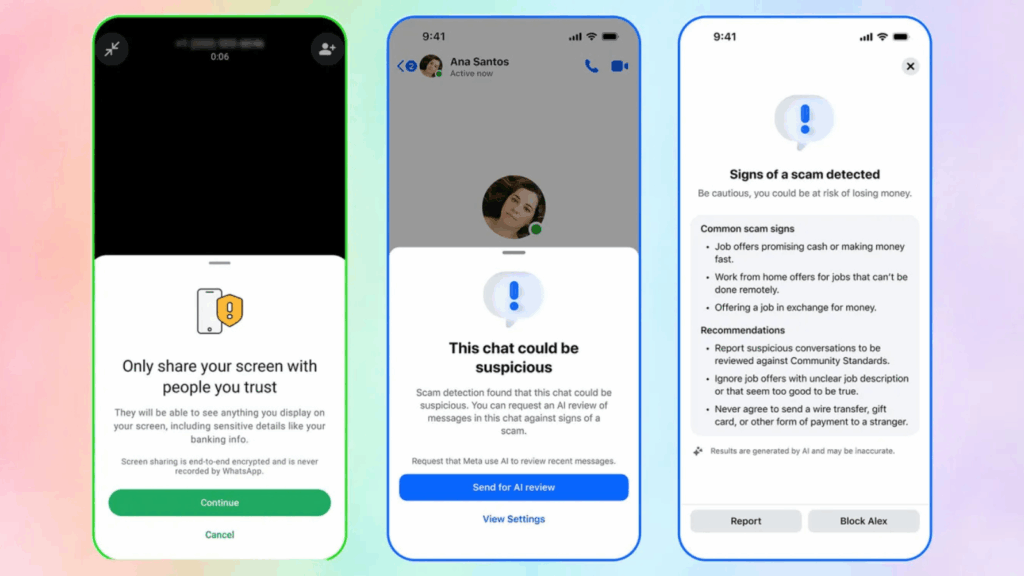
Meta Introduces New Security Tools to Protect WhatsApp and Messenger Users from Scams

Meta has announced a new set of security tools aimed at strengthening protection for WhatsApp and Messenger users against online scams. According to Meta, these new updates are designed to help users identify and prevent fraudulent attempts that target personal data, financial information, and digital identities. Screen-Sharing Warnings on WhatsApp WhatsApp is rolling out new

Meta Introduces New Security Tools to Protect WhatsApp and Messenger Users from Scams Read More »

New .NET CAPI Backdoor Targets Russian Automotive and E-Commerce Firms via Phishing ZIPs

Cybersecurity researchers have uncovered a fresh phishing campaign that appears aimed at organizations in Russia’s automotive and e-commerce sectors, using a previously unseen .NET implant, named CAPI Backdoor. According to Seqrite Labs, attackers distributed a ZIP attachment to trigger infection, and the ZIP artifact was uploaded to VirusTotal on October 3, 2025. image import–phishing-zip-sample Attack

New .NET CAPI Backdoor Targets Russian Automotive and E-Commerce Firms via Phishing ZIPs Read More »

Attackers Use Blockchain Smart Contracts to Distribute Malware Through Compromised WordPress Sites

Cybersecurity researchers have observed a financially motivated threat actor, tracked as UNC5142, leveraging blockchain smart contracts to distribute information-stealing malware targeting both Windows and macOS systems. This operation demonstrates how attackers combine traditional web compromises with modern Web3 technology to evade detection and increase operational resilience. Malware Distribution via WordPress and Blockchain According to the

Attackers Use Blockchain Smart Contracts to Distribute Malware Through Compromised WordPress Sites Read More »

Banking Malware Exploits WhatsApp to Take Remote Control of Computers

A newly discovered malware campaign is spreading rapidly across Brazil, using WhatsApp as its main delivery channel. Cybersecurity experts have identified this advanced banking Trojan as “Maverick”, a threat capable of taking remote control of infected computers and stealing sensitive financial data. Massive Scale of Infection Researchers report that over 62,000 infection attempts were blocked

Banking Malware Exploits WhatsApp to Take Remote Control of Computers Read More »

Hackers Use 13,000+ Domains via Cloudflare to Conduct ClickFix Attacks

In mid-2025, cybersecurity researchers at Lab539 detected an unexpected rise in a new browser-based malware campaign known as ClickFix. First appearing quietly in July, this threat quickly grew by registering over 13,000 unique domains aimed at tricking users into running malicious commands on their own devices. How ClickFix Works ClickFix attacks utilize compromised or low-cost

Hackers Use 13,000+ Domains via Cloudflare to Conduct ClickFix Attacks Read More »

175 Malicious npm Packages Used in Credential Phishing Campaign with Over 26,000 Downloads

Security researchers have discovered 175 malicious packages on the npm registry, collectively downloaded about 26,000 times, that were used as part of a credential phishing campaign named Beamglea. The campaign used npm and unpkg.com as free hosting to serve redirect scripts, which in turn sent victims to Microsoft credential harvesting pages, increasing the realism and

175 Malicious npm Packages Used in Credential Phishing Campaign with Over 26,000 Downloads Read More »

Microsoft Warns of ‘Payroll Pirates’ Hijacking HR SaaS Accounts to Divert Employee Salaries

A cyber threat group identified as Storm-2657 has been observed taking over employee accounts with the intent of redirecting salary payments to attacker-controlled bank accounts. According to a report from the Microsoft Threat Intelligence team, “Storm-2657 is actively targeting various U.S.-based organizations, especially employees in sectors such as higher education, to infiltrate third-party Human Resources

Microsoft Warns of ‘Payroll Pirates’ Hijacking HR SaaS Accounts to Divert Employee Salaries Read More »

ClayRat Spyware Targets Android Users Using Fake WhatsApp, TikTok Apps

A sophisticated Android spyware campaign, known as ClayRat, has been actively targeting users in Russia by exploiting fake apps and deceptive websites. The threat actors are impersonating widely-used apps such as WhatsApp, TikTok, Google Photos, and YouTube to trick victims into installing malware. According to Zimperium researcher Vishnu Pratapagiri, once installed, ClayRat can collect SMS messages, call

ClayRat Spyware Targets Android Users Using Fake WhatsApp, TikTok Apps Read More »