
Google has unveiled a new security measure aimed at reducing malware infections and online scams on Android devices. The update introduces an “advanced flow” for sideloading apps, requiring users to wait 24 hours before installing applications from unverified developers.
This move is designed to strengthen user protection while still preserving Android’s flexibility and openness. The decision follows earlier steps by Google to enforce developer verification requirements, ensuring that only registered developers can distribute apps on certified Android devices.
Why the New Security Measure Matters
Cybercriminals often exploit sideloading by convincing users to install malicious apps from unofficial sources. These apps may request elevated permissions, allowing attackers to disable built-in protections like Google Play Protect, which is designed to detect harmful applications.
The new delay mechanism is expected to disrupt such attack chains. By forcing a waiting period, users have more time to reconsider their actions and identify potential scams before proceeding.
How the 24-Hour Advanced Flow Works
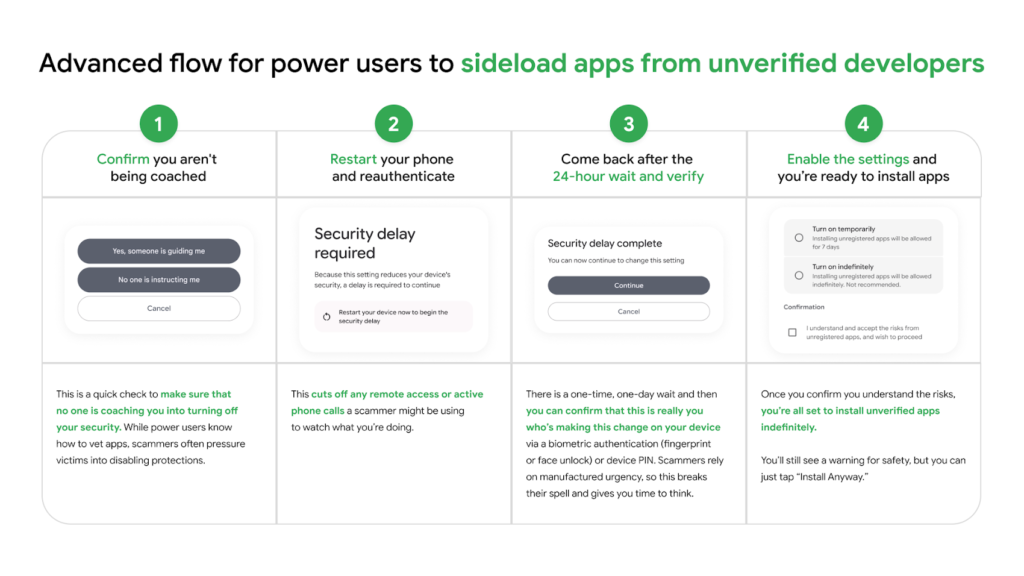
To install apps from unverified developers, users must now follow a stricter, multi-step process:
- Enable developer mode in device settings
- Confirm the action is voluntary and not influenced by external guidance
- Restart the device and re-authenticate
- Wait for a mandatory 24-hour period
- Verify identity using biometrics or a device PIN
- Proceed with installation, either temporarily for seven days or permanently
This layered approach is intended to make it significantly harder for attackers to manipulate users in real time.
Balancing Security and Developer Freedom
While the policy aims to improve security, it has sparked concerns among developers and privacy advocates. Organizations such as Electronic Frontier Foundation, The Tor Project, and Proton argue that stricter verification rules could create barriers for independent developers and raise questions about data privacy.
In response, Google announced a new option called “limited distribution accounts.” This feature allows students and hobbyist developers to share apps with up to 20 devices without requiring government-issued identification or registration fees.
Upcoming Rollout Timeline
Google confirmed that both the advanced sideloading flow and limited distribution accounts will be introduced in August 2026. The broader developer verification requirements are expected to take effect shortly afterward.
Notably, these restrictions will not apply to installations performed via Android Debug Bridge, which remains a tool primarily used by developers and advanced users.
Rising Android Malware Threats
This update comes amid a surge in Android malware activity. A newly identified malware strain, Perseus, has been targeting users in regions such as Turkey and Italy, aiming to take control of devices and commit financial fraud.
Security researchers have also identified at least 17 different Android malware families in recent months, highlighting the growing sophistication and scale of mobile threats.
Found this article interesting? Follow us on X (Twitter) , Facebook, Blue sky and LinkedIn to read more exclusive content we post.