
Meta has disabled more than 150,000 accounts connected to scam centers in Southeast Asia, part of a coordinated global effort involving authorities from Thailand, the U.S., the U.K., Canada, Korea, Japan, Singapore, the Philippines, Australia, New Zealand, and Indonesia.
The crackdown also led to 21 arrests by the Royal Thai Police. This action follows a pilot initiative in December 2025, which resulted in the removal of 59,000 accounts, Pages, and Groups, alongside six arrest warrants.
Growing Sophistication of Online Scams
According to Meta, online scams have become increasingly industrialized and organized, with networks in countries like Cambodia, Myanmar, and Laos running operations resembling full-scale businesses. These scams cause real harm, disrupting lives, eroding trust, and intentionally evading detection.
New Tools to Protect Users
Meta announced several new features to detect and prevent scams:
- Facebook Warnings: Alerts users when interacting with suspicious accounts.
- WhatsApp Device Linking Alerts: Notifies users if a QR code attempt could link a scammer’s device to their account.
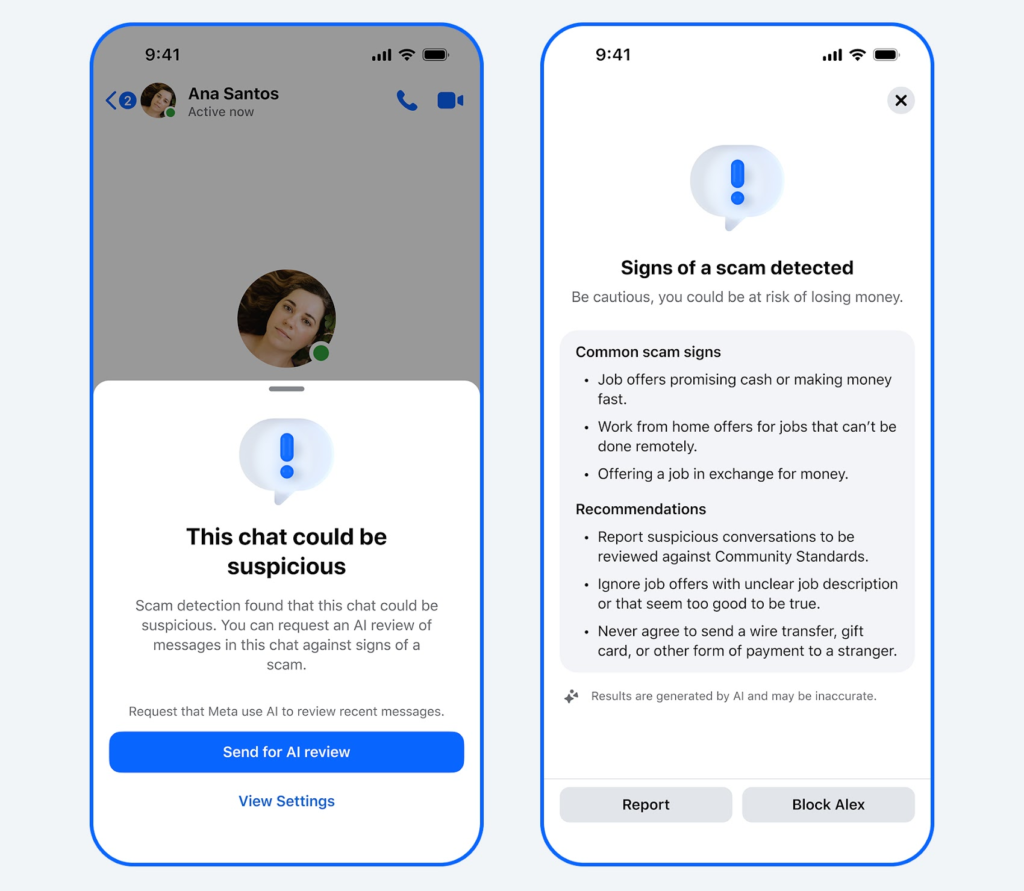
- Messenger Advanced Scam Detection: Prompts users to share recent chat messages for AI-assisted scam reviews when conversations with new contacts exhibit common scam patterns such as suspicious job offers.
Large-Scale Removals and Advertiser Verification
In 2025, Meta removed over 159 million scam advertisements for policy violations and deleted 10.9 million Facebook and Instagram accounts linked to criminal scam centers. The company also plans to expand advertiser verification to increase transparency and reduce misrepresentation by bad actors.
International Cybercrime Response
The development aligns with the U.K. government’s launch of a new Online Crime Centre aimed at combating cybercrime fueled by scam networks operating across Southeast Asia, West Africa, Eastern Europe, India, and China. The centre will coordinate specialists from government, police, intelligence agencies, banks, mobile networks, and major tech firms.
The centre will deploy artificial intelligence to identify emerging fraud patterns, stop suspicious bank transfers quickly, and use “scam-baiting chatbots” to mislead fraudsters and gather intelligence. With over £30 million in funding, it aims to block scam messages, freeze criminal accounts, remove scam social media profiles, and disrupt operations at their source.
Found this article interesting? Follow us on X (Twitter) , Facebook, Blue sky and LinkedIn to read more exclusive content we post.

