Cybersecurity specialists have identified a significant vulnerability in how workflow automation platforms are being weaponized by criminal organizations. Since the latter part of 2025, malicious actors have systematically exploited n8n—a widely-used cloud-based process automation solution—to conduct elaborate phishing schemes and deploy harmful software.
Researchers from Cisco’s threat intelligence division documented the concerning trend in a comprehensive analysis, revealing how attackers leverage legitimate enterprise infrastructure to circumvent conventional email security systems. The expertise shared by threat analysts highlights a troubling pattern where ordinary productivity solutions become unwitting channels for delivering dangerous payloads and harvesting system information.
How the Platform Facilitates Legitimate Use
N8n operates as a process automation framework designed to connect multiple software applications, web services, and artificial intelligence systems. Organizations utilize the platform to automate data synchronization, create intelligent workflows, and execute recurring operational tasks without requiring dedicated server infrastructure.
The platform operates on a freemium model, enabling developers to establish accounts and access cloud-hosted automation capabilities. This arrangement provides users with personalized cloud domains following a standardized naming convention, allowing seamless access to configured automation processes.
A core feature involves webhook functionality—specialized connection points that activate workflows when external systems transmit data. These technical endpoints use unique web addresses to receive information and initiate corresponding automation sequences.
The Exploitation Vector
Security analysts at Cisco Talos identified that these same webhook connection points, which operate under the platform’s legitimate domain infrastructure, have become targets for criminal exploitation. Documentation dating back to October 2025 demonstrates consistent abuse patterns throughout recent months.
The mechanics operate through what security professionals call “reverse API” connections. When external applications or users access these specialized URLs, the underlying automation sequences execute, returning results formatted as web content. Should a user access these URLs through email correspondence, their browser interprets the returned information as a standard web page.
This technical architecture creates significant security concerns. Threat actors recognize that messages originating from legitimate, established domains bypass numerous email filtering mechanisms that typically block unknown sources. By routing malicious content through recognized infrastructure, attackers achieve a critical objective: establishing trust through association with reputable systems.
Growing Scale of Abuse
The adoption of this exploitation method has accelerated dramatically. Comparative analysis between early 2025 and the first quarter of 2026 reveals a startling increase: email messages containing these malicious connection points multiplied nearly sevenfold over this period.
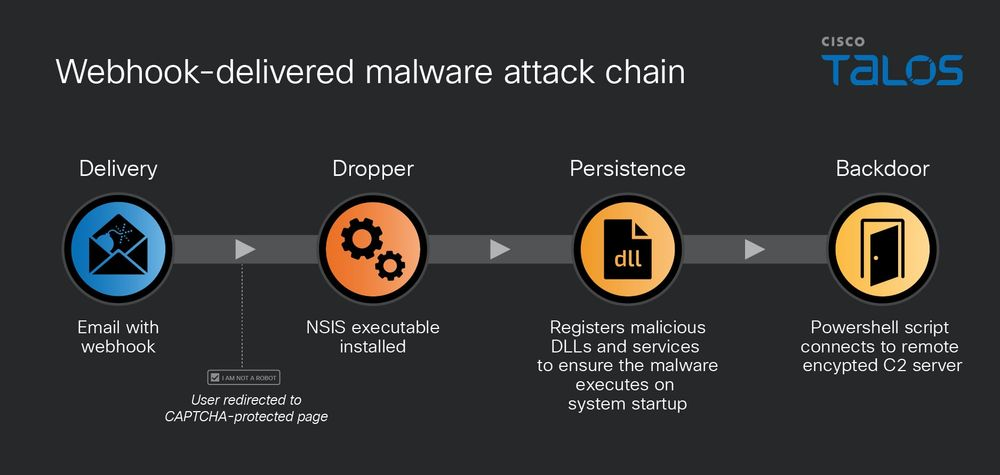
Documentation of actual attack campaigns illustrates the practical implementation. In documented instances, attackers craft fraudulent communications claiming to contain shared documents, complete with embedded automation workflow links. Users who click these connections encounter seemingly legitimate security verification screens. Upon completing these verification steps, files automatically download to victim systems.
The entire operation exploits the browser’s interpretation of the source domain. Since all activity occurs within the legitimate domain’s web environment, downloaded malicious files appear to originate from the trusted platform itself—a critical deception that circumvents many security awareness protocols.
Payload Delivery and Persistence
The malicious files deployed through these campaigns serve specific objectives. Attackers focus on delivering executable programs or installation packages that function as intermediaries for modified versions of legitimate remote management software systems. These tools—commonly used for legitimate technical support and system administration—become repurposed for establishing unauthorized remote access.
Once installed, these compromised tools establish connections to attacker-controlled command infrastructure, enabling persistent unauthorized system access and control.
Device Fingerprinting Operations
A parallel exploitation pattern involves using these workflows for reconnaissance and victim identification. Attackers embed imperceptible tracking elements—typically encoded as invisible image files or monitoring code—within email messages. These elements maintain connections to the automation platform’s infrastructure.
The moment a recipient opens the email message in their email application, automatic data transmission occurs. System information, including identified email addresses and other device characteristics, flows back to attacker infrastructure. This reconnaissance capability enables threat actors to verify successful contact with targets and potentially prioritize victims for subsequent attack phases.
Automation as a Double-Edged Sword
Security researchers emphasize a fundamental concern: the same technological capabilities that provide legitimate value to organizations become problematic when repurposed for malicious activities. Process automation platforms, by their nature, facilitate rapid, large-scale task execution with minimal manual intervention.
When these capabilities fall into malicious hands, attackers can simultaneously conduct thousands of coordinated phishing operations, deliver payloads across multiple systems, and gather intelligence on vast numbers of potential victims—all with automation efficiency.
The responsibility, security professionals argue, belongs to organizational security teams. As automation technology becomes increasingly central to business operations, maintaining these platforms as beneficial tools rather than security liabilities requires vigilant monitoring, swift response to emerging threats, and integration of automation security into comprehensive defense strategies.
Found this article interesting? Follow us on X (Twitter) , Facebook, Blue sky and LinkedIn to read more exclusive content we post.