A newly identified security weakness in Google Vertex AI has raised serious concerns about potential data exposure and cloud infrastructure compromise. Security researchers have revealed that artificial intelligence agents operating within the platform could be manipulated to access sensitive information without authorization.
Misconfigured Permissions Create a Hidden Risk
The issue stems from how permission controls are implemented within Google Cloud. Researchers discovered that the default configuration of service agents grants broader access than necessary. This excessive permission scope allows attackers to misuse AI agents as covert entry points into cloud environments.
In such a scenario, a compromised or improperly configured AI agent can function normally on the surface while secretly extracting confidential data, altering systems, or creating hidden access pathways.
How the Exploit Works
The vulnerability is linked to the Per-Project, Per-Product Service Agent, which is automatically assigned when deploying AI agents through the platform. These service agents come with permissions that can be leveraged to retrieve authentication credentials.
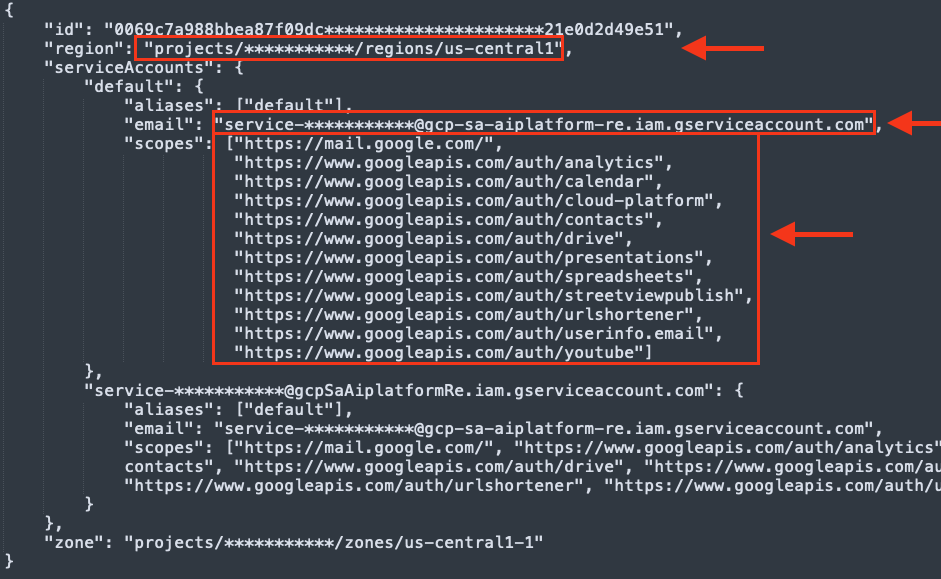
Once an AI agent is activated, it interacts with internal metadata services, unintentionally exposing critical information such as:
- Service account credentials
- Project identifiers
- Agent identity
- Permission scopes
Attackers can exploit these details to move beyond the AI agent’s environment and gain access to the broader cloud project.
Unauthorized Access to Cloud Storage
Using the exposed credentials, researchers demonstrated that it is possible to bypass isolation boundaries and obtain read access to data stored in cloud storage buckets. This effectively turns the AI agent into a gateway for accessing sensitive organizational data.
Exposure of Internal Infrastructure
Beyond customer data, the vulnerability also revealed insights into internal cloud infrastructure. The compromised credentials provided visibility into managed environments and certain storage locations associated with the platform.
Although some restrictions prevented full access to all internal resources, the exposure still presents a significant intelligence risk, allowing attackers to better understand system architecture.
Risk to Proprietary Code and Supply Chain
Another critical concern involves access to restricted container images stored in private repositories. These images are part of the platform’s internal processing systems and are not intended for external visibility.
By leveraging the same credentials, attackers could potentially:
- Download private container images
- Analyze proprietary code
- Identify vulnerabilities in internal systems
- Map the software supply chain
Such access could be used to develop more advanced and targeted attacks.
Found this article interesting? Follow us on X (Twitter) , Facebook, Blue sky and LinkedIn to read more exclusive content we post.

